Glossary
104 terms and techniques of the donut trade.
Equipment
Automatic Donut Fryer
A large commercial fryer that automatically moves donuts through hot oil on a conveyor belt, ensuring consistent cook time and oil temperature without manual flipping.
Bench Scraper
A flat rectangular tool with a handle used to divide dough, clean work surfaces, and move cut pieces without tearing them.
Candy Thermometer
A heat-resistant probe thermometer used to monitor frying oil temperature, typically targeting 350–375°F (175–190°C) for donuts.
Depositor
A piston-driven machine that deposits precise portions of batter into fryers or molds, commonly used for cake donuts and donut holes to ensure uniform size.
Digital Scale
A precision weighing device used to measure dough, toppings, and fillings accurately, ensuring batch consistency essential in donut production.
Donut Cutter
A round, dual-ring cutting tool (typically aluminum or stainless steel) that stamps both the outer donut ring and the center hole from sheeted dough in one press.
Donut Dropper
A manual or automated tool that portions yeast dough rings and drops them directly into hot oil, commonly used for old-fashioned or ring donuts.
Donut Robot
A compact automated fryer-depositor unit that simultaneously portions cake donut batter, fries it, and flips each donut automatically — popular in small retail shops.
Dough Divider
A commercial machine that portions a large dough ball into equal-weight pieces simultaneously, dramatically speeding up the portioning step.
Dough Rounder
A machine that automatically shapes divided dough chunks into smooth, uniform balls via a spinning cone or plate, replacing manual rounding.
Dough Sheeter
A motorized machine with two counter-rotating rollers that flatten and thin dough to a precise, uniform thickness, replacing time-consuming hand-rolling.
Exhaust Hood
A ventilation canopy installed above fryers to capture steam, smoke, and grease-laden air, maintaining air quality and preventing fire hazard buildup.
Fire Suppression System
An automatic chemical or wet chemical system mounted above commercial fryers that activates to extinguish grease fires instantly.
Fondant Warmer
A heated vessel that keeps fondant icing at the ideal dipping temperature (95–100°F) so it flows smoothly over donuts without setting prematurely.
Fryer Basket
A wire mesh basket inserted into a fryer to hold donuts or donut holes, making it easier to lower and retrieve them from hot oil.
Glazing Waterfall
A curtain of flowing glaze through which freshly fried donuts pass on a conveyor or wire rack, coating them quickly and evenly.
Immersion Blender
A hand-held blending tool used in donut shops to emulsify glazes, blend custard fillings, or smooth icings quickly without transferring to a blender.
Jelly Injector
A pressurized machine fitted with a needle nozzle used to fill finished donuts with cream, jelly, custard, or other fillings after frying.
Pastry Brush
A brush with natural or silicone bristles used to apply glazes, egg washes, or melted butter to donuts evenly.
Piping Bag
A cone-shaped bag fitted with a decorating tip, used to apply icings, glazes, or fillings to donuts with precision.
Proof Box
A temperature- and humidity-controlled cabinet used to ferment (proof) shaped donuts before frying, allowing yeast to produce CO2 and give the dough its rise.
Proof Rack
A multi-tiered rolling cart used to hold sheet pans of shaped dough during proofing, maximizing floor space efficiency.
Retarder
A refrigerated cabinet that slows yeast fermentation overnight, allowing bakers to prepare dough in advance and resume proofing the following morning.
Rolling Pin
A cylindrical tool used manually to flatten and roll dough to a uniform thickness when a sheeter is unavailable.
Spiral Mixer
A heavy-duty commercial mixer with a spiral-shaped hook that kneads dough efficiently without overheating it, essential for developing proper gluten structure in yeast donuts.
Temperature Controller
An electronic device on fryers and proof boxes that maintains set temperatures precisely, ensuring consistent proofing and frying conditions.
Wire Cooling Rack
An elevated grid rack on which freshly fried donuts rest to allow excess oil to drain and the surface to cool slightly before glazing or topping.
Finishing
Cinnamon Sugar
A blend of granulated sugar and ground cinnamon used as a dry coating on warm freshly fried donuts, typically rolled or shaken to coat evenly.
Crumb Topping
A mixture of butter, flour, and sugar pressed into streusel-like crumbs scattered over donuts before or after baking/frying for added crunch.
Edible Glitter
Decorative, food-safe shimmer powder or flakes made from sugar, starch, or mica that add sparkle to finished donuts.
Fondant
A smooth, opaque sugar paste used as a thicker donut coating; made by crystallizing a supersaturated sugar solution, it sets firmer than a standard glaze.
Ganache
A rich mixture of melted chocolate and warm cream used as a donut topping or dip, setting to a glossy, fudge-like finish.
Glaze
A thin, sweetened coating made from powdered sugar and water (or milk) applied to donuts while warm to create a shiny, sweet surface layer.
Maple Icing
A flavored icing made with maple extract or real maple syrup combined with powdered sugar and cream, commonly used on bacon-topped donuts.
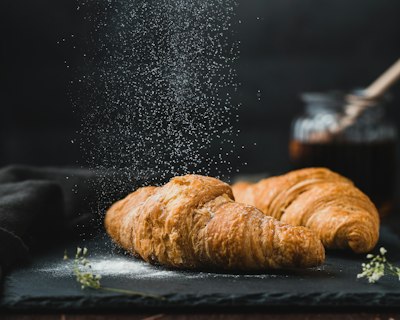
Powdered Sugar
Finely milled confectioners' sugar (10X grade) used to dust donuts lightly or as the primary ingredient in glazes and icings.
Royal Icing
A hard-drying icing made from powdered sugar and meringue powder or egg whites, used for decorating donuts with intricate designs.
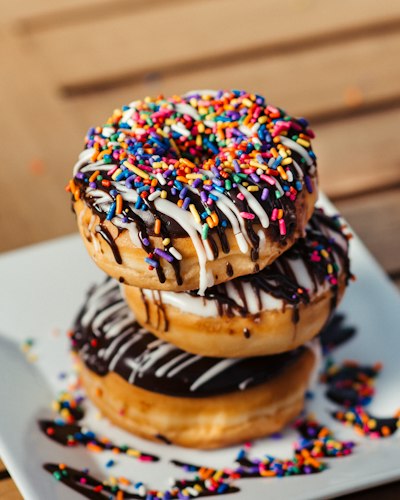
Sprinkles
Small sugar- or wax-coated candy pieces (jimmies, nonpareils, or quins) pressed onto glazed or iced donuts for color and texture.
Frying
Dark Frying
A condition where oil has broken down significantly, producing dark-colored, greasy donuts with off-flavors due to excessive use or overheating.
Flash Point
The temperature at which frying oil can ignite; knowing this value is critical for fire safety in donut operations.
Free Fatty Acids (FFA)
Breakdown products of frying oil that increase over use; high FFA levels (above 0.5%) signal oil degradation and signal need for oil change.
Fry Life
The total usable duration of frying oil before quality degradation requires replacement, typically measured in pounds of product fried per pound of oil.
Frying Oil
The cooking medium in which donuts are submerged; ideal frying oils have a high smoke point (≥375°F), neutral flavor, and long fry life.
Oil Filtration
The process of removing food particles and carbon from frying oil using filter paper or a built-in pump system, extending oil life and improving donut quality.
Oil Level Sensor
A sensor in commercial fryers that monitors oil volume and triggers automatic top-off systems to maintain consistent frying depth.
Oil Turnover
The rate at which fresh oil is added to a fryer to replace oil absorbed by donuts; higher turnover refreshes oil and maintains quality.
Smoke Point
The temperature at which an oil begins to break down and emit visible smoke; for donut frying this should be well above 375°F to avoid off-flavors.
Splatter Screen
A mesh cover placed over or near the fryer to catch hot oil droplets during frying, improving safety and reducing cleanup.
Total Polar Compounds (TPC)
A measurement of oil degradation; most regulatory standards require discarding frying oil when TPC exceeds 24–27%, detectable with test strips or meters.
Ingredients
Active Dry Yeast
Dormant yeast granules that must be dissolved in warm water before use; once activated, they ferment sugars and produce CO2 to leaven yeast donuts.
Baking Powder
A chemical leavening agent containing baking soda and an acid (cream of tartar or sodium aluminum sulfate) used in cake donuts to create lift without yeast.
Baking Soda
Sodium bicarbonate; when combined with acidic ingredients (buttermilk, vinegar), it produces CO2 bubbles that leaven cake donut batter.
Boston Cream Filling
A pastry cream (vanilla custard) filling used inside Boston cream donuts, topped with chocolate ganache.
Bread Flour
A high-protein wheat flour (12–14% protein) that creates strong gluten networks, giving yeast-raised donuts their characteristic chewy, airy texture.
Cake Flour
A low-protein, finely milled flour (7–9% protein) used in cake donuts to produce a tender, crumbly crumb rather than a chewy texture.
Cinnamon
A ground spice from the bark of Cinnamomum trees, widely used in old-fashioned, crumb, and apple cider donuts for its warm, sweet-spicy flavor.
Cocoa Powder
Finely ground, defatted cacao solids added to dough or glaze to produce chocolate donuts; available in natural (acidic) and Dutch-process (alkalized) varieties.
Custard Filling
A creamy, cooked mixture of egg yolks, sugar, cornstarch, and milk used to fill donuts; it thickens upon cooling to a stable, pipeable consistency.
Dextrose
A simple sugar (glucose) used in donut formulas to promote browning via the Maillard reaction and to provide fermentable sugars for yeast.
Donut Mix
A pre-blended dry ingredient package containing flour, sugar, leavening, and flavorings, requiring only the addition of water and sometimes eggs or oil to produce a consistent batter.
Flavor Emulsion
A water-based, concentrated flavoring dispersed in a water solution rather than alcohol; used in donuts and icings for stable, heat-resistant flavor.
Instant Yeast
A fast-acting yeast that can be added directly to dry ingredients without pre-dissolving, shortening overall production time compared to active dry yeast.
Lard
Rendered pork fat historically used as both a frying medium and dough shortening for donuts, prized for its flavor and high smoke point.
Nonfat Dry Milk
Dehydrated skim milk powder added to donut dough for flavor, color enhancement, and improved crust formation.
Nutmeg
A warm spice grated from the seed of Myristica fragrans, classically used in cake donuts to add depth and subtle warmth.
Palm Oil
A semi-solid vegetable oil widely used as frying medium in commercial donut production for its high smoke point, neutral flavor, and long fry life.
Raspberry Jam
A fruit preserve made from raspberries commonly used as a filling in jelly donuts; must have low water activity to prevent spoilage inside the donut.
Shortening
Solid vegetable fat (often partially hydrogenated) used in donut dough to tenderize crumb, extend shelf life, and improve frying stability.
Soy Lecithin
An emulsifier derived from soybeans added to donut dough to improve fat distribution, dough workability, and finished product softness.
Sugar Syrup
A liquid solution of sugar and water heated to specific temperatures (soft-ball, hard-ball) used as a base for fudge-style toppings and icings.
Vanilla Extract
A flavoring derived from vanilla beans used in donut dough, glazes, and fillings for its characteristic sweet, floral aroma.
Supplies
Decorating Tip
A metal or plastic nozzle inserted into a piping bag to shape icing into stars, rosettes, lines, or other decorative patterns on donuts.
Deli Paper
Lightweight, grease-resistant paper sheets used to handle donuts hygenically and display them in cases without direct hand contact.
Display Case
A refrigerated or ambient glass-front case used to merchandise and display donuts attractively at the point of sale.
Donut Box
A paperboard retail packaging box designed to hold 6 or 12 donuts for customer carry-out, with a window display option for visibility.
Glassine Bags
Translucent grease-resistant paper bags used to individually wrap donuts, protecting them from moisture and contaminants at point of sale.
Offset Spatula
A spatula with an angled blade used to spread glazes or frostings smoothly over the tops of donuts or transfer delicate pieces.
Oil Test Strip
A colorimetric paper strip dipped in frying oil to estimate Total Polar Compound (TPC) levels and determine when oil needs replacing.
Parchment Paper
Non-stick baking paper placed under proofing donuts so they can be slid into the fryer without sticking or deflating.
Sheet Pan
A flat aluminum or stainless steel baking tray used to transport cut or shaped donuts to the proofing cabinet and fryer area.
Silicone Mat
A reusable, non-stick baking surface placed on sheet pans to prevent dough from sticking during proofing; easy to clean and durable.
Squeeze Bottle
A flexible plastic bottle with a nozzle tip used to drizzle glazes, sauces, or decorating icings on donuts with control.
Techniques
Beignet
A French-style deep-fried choux pastry square dusted generously with powdered sugar; associated with New Orleans cuisine.
Bench Rest
A brief 5–15 minute relaxation period after rounding where gluten tension releases, making dough easier to sheet or shape.
Benchwork
The manual process of dividing, rounding, resting, and shaping dough on a work surface before the proofing stage.
Cake Donut
A donut leavened by chemical agents (baking powder/soda), producing a denser, more tender crumb; examples include old-fashioned, crumb, and sour cream donuts.
Churro Donut
A ring or stick donut made from choux dough extruded through a star tip and fried, then rolled in cinnamon sugar like a traditional churro.
Cronut
A croissant-donut hybrid created by frying laminated pastry dough, yielding flaky, layered layers with a donut shape; trademarked by Dominique Ansel.
Cruller
A twisted, ridged donut made from a choux-like dough extruded through a star tip, producing a light, airy, crispy exterior.
Donut Hole
A small, round piece of dough from the center cut-out of a ring donut; fried and sold separately as a bite-sized treat (also called Munchkins or Timbits).
FIFO (First In, First Out)
A stock rotation principle where the oldest ingredients and finished donuts are used or sold before newer stock to maintain freshness and reduce waste.
Gluten Development
The process of forming an elastic protein network (gluten) in wheat dough through hydration and mixing; critical for giving yeast donuts their structure and chew.
Laminated Dough
A dough with alternating layers of fat and dough created through repeated folding, producing a flaky, multi-layered texture in specialty fried pastries.
Lamination
A technique of folding fat into dough repeatedly to create distinct flaky layers, used for croissant-style or cruffin donuts.
Long John
An oblong, bar-shaped yeast donut typically filled with cream or custard and topped with chocolate icing or glaze.
Maillard Reaction
A chemical browning reaction between amino acids and reducing sugars that occurs during frying, producing the golden color and complex flavors of donuts.
Mochi Donut
A donut made with mochiko (glutinous rice flour) for a chewy, stretchy texture different from traditional wheat-based donuts.
Old-Fashioned Donut
A cake donut with a craggy, irregular surface caused by chemical leavening and high-temperature frying; often topped with a simple glaze.
Over-proofing
A condition where dough rises beyond optimal fermentation time, causing weak gluten structure, excessive oiliness, and collapsed centers after frying.
Portioning
Dividing dough into equal-weight pieces using a scale or divider to ensure uniform donut size and consistent cook times.
Proofing
The final rise of shaped yeast dough in a warm, humid environment before frying, during which yeast produces CO2 to inflate and lighten the dough.
Rounding
Shaping divided dough pieces into smooth balls by tucking and sealing the bottom, building surface tension for even rise.
Scoring
Making shallow cuts on dough surfaces before frying to control expansion and create decorative patterns, common on old-fashioned donuts.
Under-proofing
Insufficient fermentation time leaving dough dense; under-proofed donuts emerge from the fryer with pale, bready, compact interiors.
Yeast Donut
A donut leavened by yeast fermentation, resulting in a light, airy, chewy texture; classic examples include glazed rings and filled long johns.